Interview Video Editing Case Study: Transforming Raw Two-Camera Footage into a Professional Branded Film
Turning a recorded interview into structured, polished and reusable video content
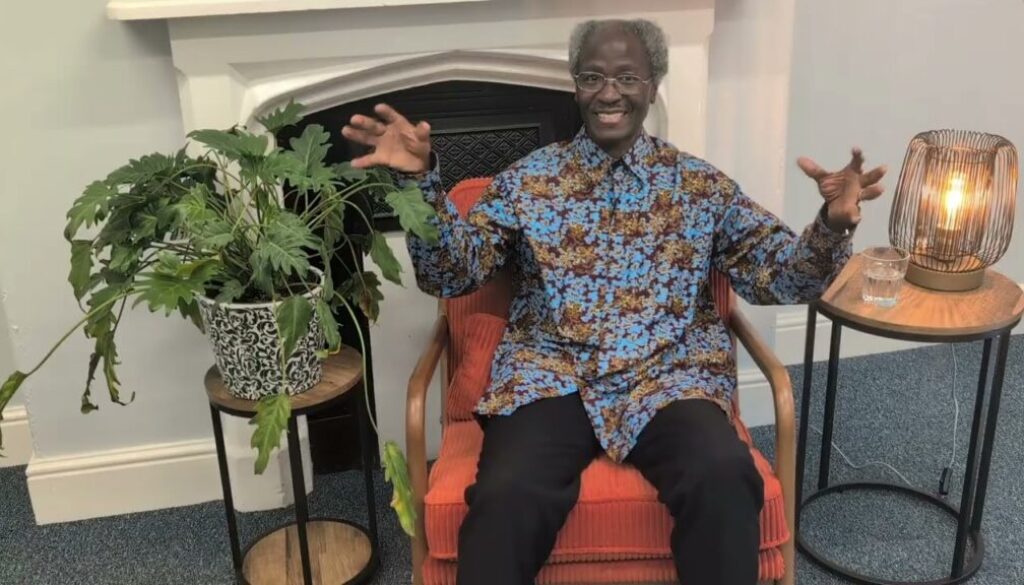
Bristol Adult Learning had recorded a long-form interview with one of its philosophy tutors, Leo, to support promotion of its philosophy courses at Stoke Lodge in Bristol.
The source material contained valuable content, but in its original form it was not ready for publication.
The interview had been recorded from two fixed camera angles, with a separate smartphone used to capture the main audio. The interviewer was considerably quieter than the tutor, the recording contained the natural pauses and repetitions of a long conversation, and nearly 42 minutes of continuous talking-head footage needed a clearer visual and editorial structure.
Xelium was commissioned to edit, enhance and restructure the interview, creating a polished full-length film alongside material that could later be repurposed for shorter videos and social media.
The original agreed scope included multi-camera editing, audio enhancement, removal of unnecessary conversation, branded title and question cards, captions and final preparation for YouTube.
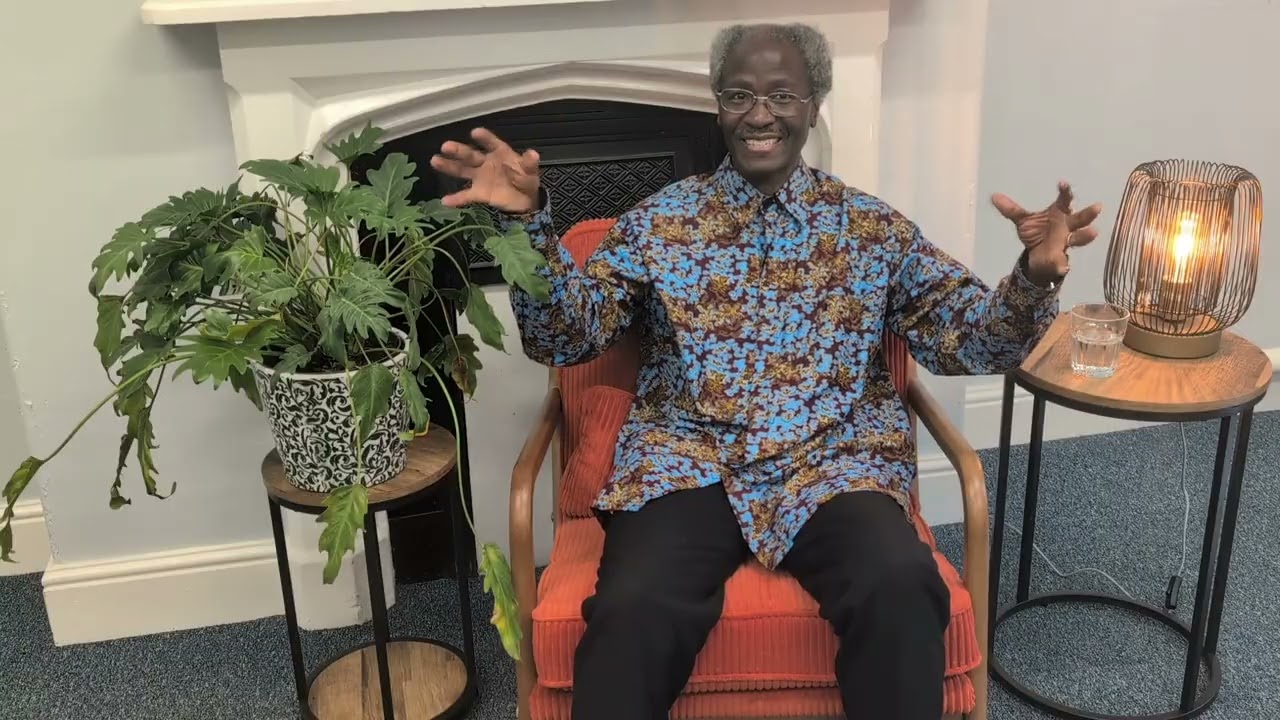
Valuable content, but not yet a finished film
The interview itself contained a strong range of material. Leo discussed:
- his journey from Tanzania to Bristol;
- why he chose philosophy;
- what happens in a philosophy class;
- his teaching style;
- philosophy and critical thinking;
- artificial intelligence and ethical decision-making;
- climate change and the common good;
- what learners can expect from the course;
- Socrates and the importance of knowing ourselves.
The challenge was therefore not a lack of content. It was finding a way to transform a long, largely static interview into something that was:
- easier to follow;
- visually more engaging;
- professionally presented;
- accessible;
- suitable for YouTube and the web;
- useful as promotional content for prospective learners.
Working with Two Camera Angles
The original interview had been recorded using two fixed cameras. This gave us the opportunity to introduce visual variation, but simply switching angles at regular intervals would have added little to the finished film. Instead, camera changes were used editorially. Different angles were selected to:
- disguise cuts;
- remove pauses and repeated phrases;
- tighten answers;
- create a more natural pace;
- emphasise changes in subject;
- avoid leaving the viewer on one uninterrupted talking-head shot for extended periods.
For longer answers, switching between the two angles also helped maintain visual movement without distracting from what Leo was saying.
Rebuilding the Audio
A separate smartphone recording. The interview had a separate audio recording captured on a smartphone positioned near the participants. This provided more usable speech than the camera audio, but it had its own challenges.
The recording had a noticeable roomy or hollow quality, and the relative position of the recorder meant Leo was substantially clearer than the interviewer.
We therefore treated the smartphone recording as the primary dialogue track and carried out audio enhancement as part of the edit. The process included:
- synchronising the separate audio with both camera recordings;
- reducing unwanted low-frequency sound;
- correcting some of the muddy and hollow characteristics of the recording;
- improving speech clarity;
- balancing overall levels;
- smoothing variations in volume;
- controlling audio peaks;
- carrying out final listening checks throughout the edited interview.
The objective was not to make a room recording sound artificially like studio audio. It was to make the dialogue clearer, more consistent, and more comfortable to listen to while retaining a natural voice.
Solving the Quiet Interviewer Problem. One of the more important editorial decisions concerned the interviewer. Because of the microphone placement, Rachele’s questions were considerably quieter than Leo’s answers. Trying to increase the interviewer level sufficiently would also have amplified room noise and resulted in an inconsistent soundtrack.
Rather than forcing the weaker audio into the finished programme, we used the structure of the interview itself to solve the problem. The spoken questions were replaced with question cards. This achieved several things at once. It:
- removed weaker audio;
- created clear breaks between topics;
- made the interview easier to navigate;
- introduced visual variation;
- allowed lengthy spoken questions to be shortened;
- gave viewers a moment to understand the subject before Leo answered.
The question cards therefore became an editorial device rather than simply a graphic addition.
Editing for Pace Without Losing the Speaker’s Voice
The aim was not to make Leo sound scripted. Part of the strength of the interview is his warmth, enthusiasm and conversational style. We therefore edited selectively. The final programme removed:
- unnecessary pauses;
- repetitions;
- conversational overlaps;
- unnecessary lead-ins and endings to answers.
- interviewer comments that did not move the discussion forward;
- sections needed only to facilitate the original interview;
At the same time, we retained the natural phrasing, humour and personal stories that gave the interview its character. This is particularly important with expert interviews. An overly aggressive edit can make somebody sound unnatural. Good interview editing should improve the audience’s experience without making the editing itself the focus.

Creating a Branded Video Structure
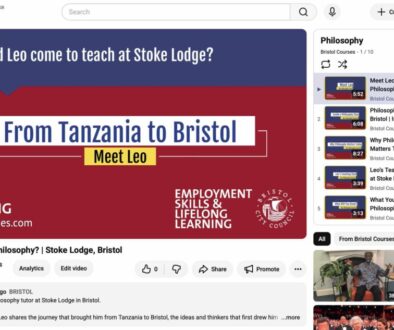
A consistent visual system was developed for the interview. This included:
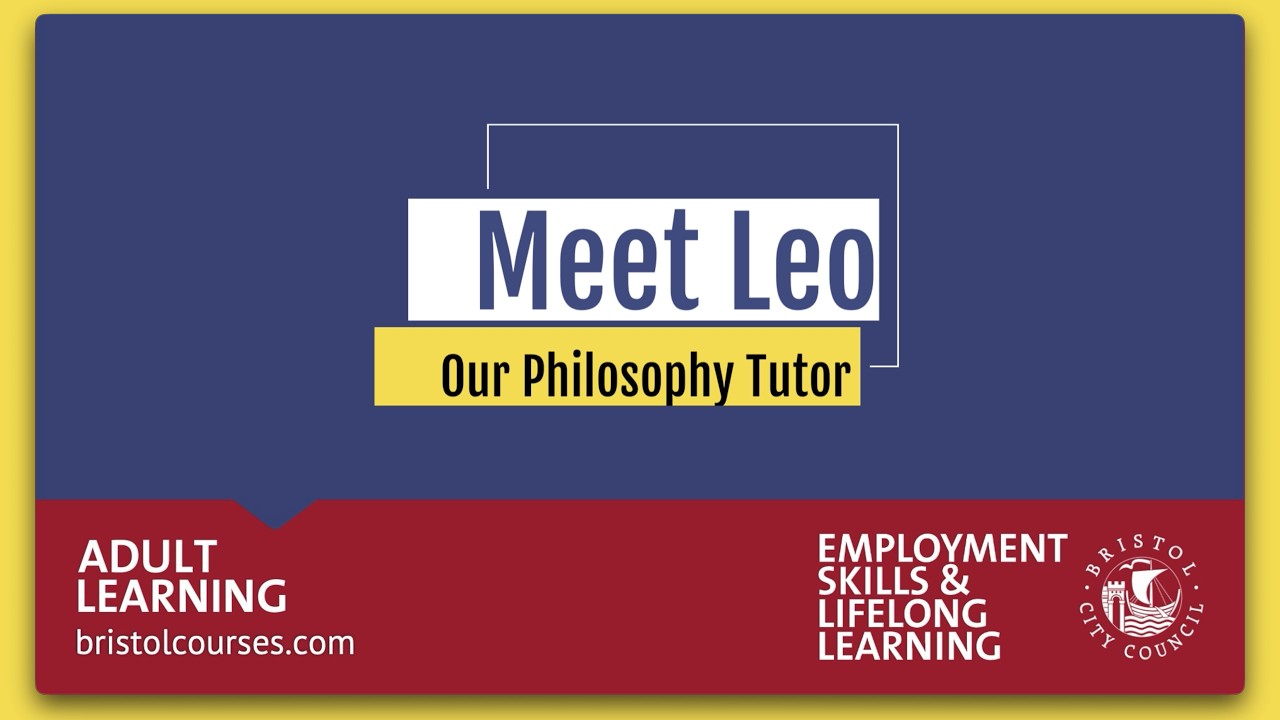
- opening title treatment;
- topic cards;
- question cards;
- typography;
- positioning and spacing;
- branding;
- outro treatment;
- captions and supporting text.
The design system was deliberately reusable. Rather than creating graphics only for the full interview, the same visual identity could be carried through to the standalone films and social-media videos created from the recording. The result was a recognisable Philosophy at Stoke Lodge video series rather than a collection of unrelated edits.
Completed Full Interview
The completed full interview runs for 38 minutes 41 seconds. Although this is relatively close to the duration of the original recording, the viewing experience is substantially different. The final version:
- removes the weakest parts of the interviewer audio;
- replaces questions with clear on-screen cards;
- removes unnecessary conversation;
- introduces defined themes and sections;
- uses both camera angles;
- improves the dialogue audio;
- applies consistent graphics and branding;
- includes reviewed captions;
- provides a much clearer route through the content.
Rather than shortening the interview purely for the sake of duration, the emphasis was on making the content structured and watchable.
Optimising the YouTube Listing
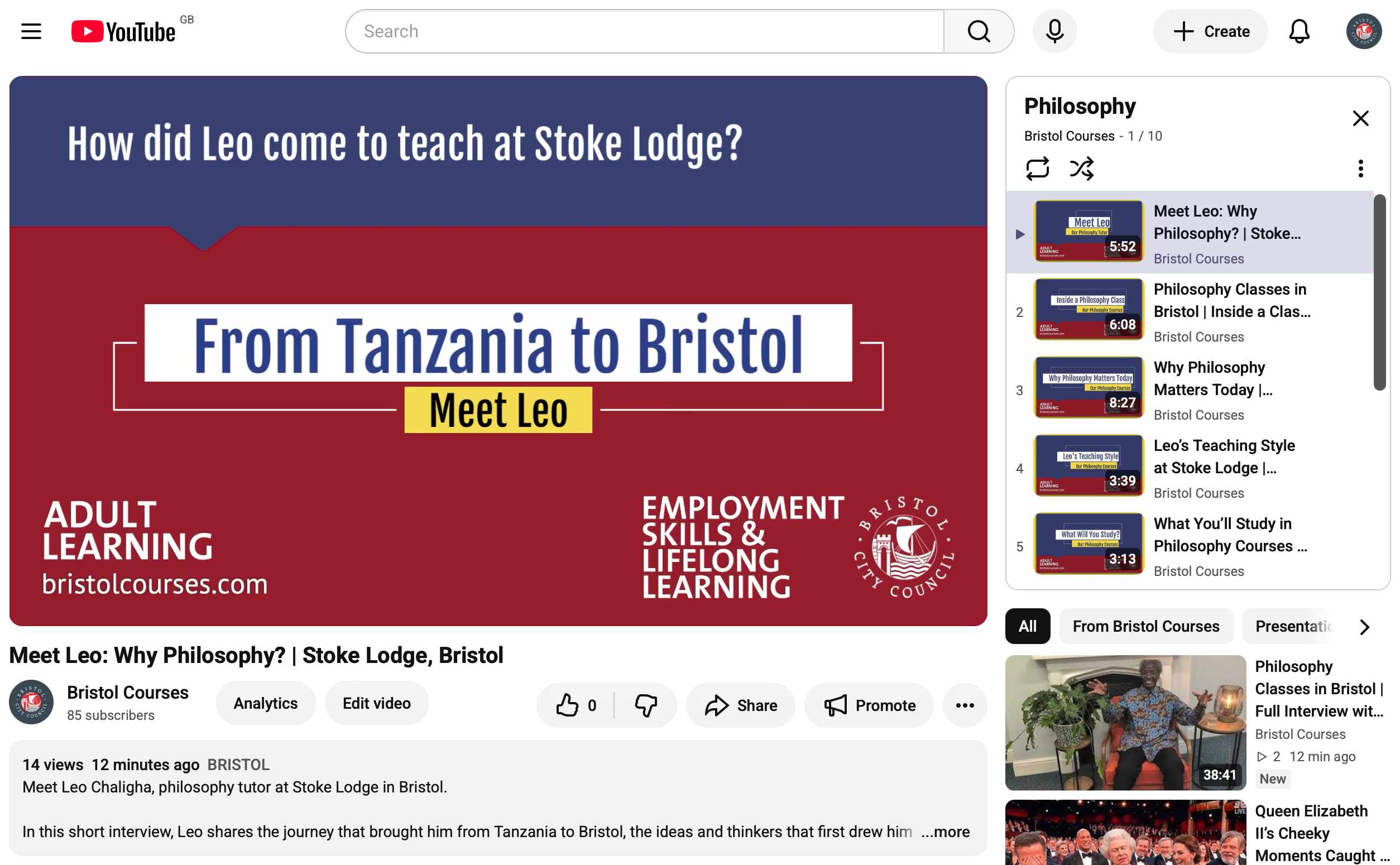
The completed film was also prepared as a discoverable YouTube asset rather than simply uploaded as a video file. This included development of:
- a search-focused video title;
- description copy;
- relevant course and location information;
- keywords (tags and hashtags);
- thumbnail;
- manual chapters;
- captions (subtitles);
- playlist building;
- links to the relevant course information;
- end-screen structure and cards.
The full film was positioned around the search intent: Philosophy Classes in Bristol
while retaining the broader interview content for viewers interested in philosophy itself. This allows the video to serve two purposes: educational content for viewers, and
course-discovery content for Bristol Adult Learning.
The Result
The full-length interview became the central asset within a much larger collection.
From the same source interview, Xelium ultimately produced:
- 1 edited and enhanced full-length interview
- 9 standalone topic videos
- 14 vertical key-moment videos for social media
For a total of: 24 finished video assets
The full interview also provided the editorial foundation for the shorter content. Once the questions, topics and strongest moments had been identified during the main edit, those same decisions could be used to create more focused pieces for different audiences and platforms.
Why Interview Editing Is More Than Cutting Footage
This project illustrates an important distinction between simple video editing and editorial post-production. The work was not simply:
Camera A + Camera B + audio → Finished Video.
It required decisions about:
- what should remain;
- what should be removed;
- how questions should be presented;
- how long answers should be structured;
- where the viewer needs a visual break;
- what constitutes a standalone topic;
- which moments could work independently;
- how the material should connect with course promotion;
- how the finished films should work on YouTube and social media.
The editing therefore became part of the content strategy.
Have an Interview That Needs More Than a Basic Edit?
Recorded interviews can contain far more usable content than is immediately apparent.
We can work with existing footage to:
- edit and enhance the main interview;
- combine multiple camera angles;
- improve and synchronise recorded audio;
- remove unnecessary interviewer material;
- create title and question cards;
- structure longer conversations into chapters;
- create branded standalone videos;
- extract social-media clips;
- prepare videos for YouTube and web publication.
- optimise video listing for target audience
Your existing recording may already contain the basis for an entire content series.
Discuss your next video project with Xelium.