Long-Form to Short-Form Video Case Study: Turning One Interview into 9 Topic Videos and 14 Social Shorts
Creating a complete content library from one expert interview
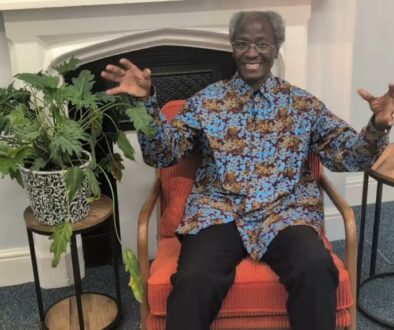
A long-form interview can contain far more usable content than a single finished video suggests. For Bristol Adult Learning, Xelium was commissioned to edit and enhance an interview with philosophy tutor Leo, recorded to support the promotion of philosophy courses at Stoke Lodge in Bristol.
The original brief already recognised the opportunity to go beyond one finished interview. Alongside editing the main footage, the agreed scope included creating approximately 8–9 standalone topic videos and 12 short-form key moments for social media.
As the interview was reviewed and edited, the amount of useful material became even clearer. The completed project ultimately produced:
- 1 full-length edited interview
- 9 standalone topic videos
- 14 vertical key-moment videos
One interview became 24 finished video assets.
Hidden Valuable Content
Valuable content was hidden inside one long conversation
The original interview covered almost 42 minutes and moved naturally across a wide range of subjects. Leo discussed:
- his journey into philosophy;
- teaching adults;
- what happens in his philosophy classes;
- why philosophy matters today;
- artificial intelligence and ethics;
- critical thinking;
- political and environmental questions;
- philosophy course content;
- climate change and the common good;
- how philosophy can change people;
- Socrates and self-knowledge.
As one continuous interview, the material had value. But different audiences would not necessarily want to watch the entire conversation to reach the one topic that interested them. The opportunity was therefore to identify the individual pieces of content already contained within the recording.
Starting with Editorial Analysis
Content repurposing begins before the timeline is cut. We first reviewed the interview as editorial material rather than simply as footage. Each answer was considered in terms of:
- subject;
- audience relevance;
- whether it could stand alone;
- potential search intent;
- promotional value;
- social-media potential;
- natural beginning and ending;
- whether the idea needed wider context to make sense.
The interview was then mapped into broader themes and shorter subsections. This created the framework for the entire project.
Nine Standalone Topic Videos
Rather than producing arbitrary clips based purely on duration, the interview was divided into nine coherent subject-led videos.
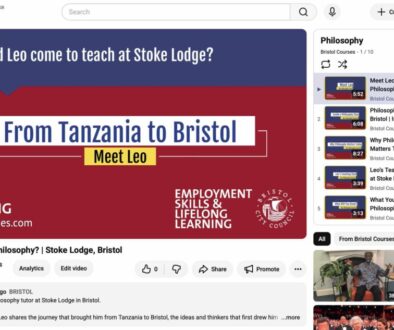
1. Meet Leo
Introducing Leo’s background, his journey from Tanzania to Bristol, what first drew him towards philosophy and the decision to choose philosophy over science. The video was structured around:
From Tanzania to Bristol
Why Philosophy?
The Turning Point
2. Inside a Philosophy Class
A practical introduction for prospective learners wanting to understand what attending one of Leo’s classes would actually be like. Topics included:
This gave Bristol Adult Learning a video specifically suited to prospective students researching the course before enrolling.
Philosophy for Everyone
Learning Together
Inside the Classroom
Making Philosophy Simple
Start Anywhere
3. Why Philosophy Matters Today
One of the strongest sections for wider discovery. Leo discusses:
The material connects philosophy with critical thinking, artificial intelligence, ethics, democracy and the challenges of modern life.
No Easy Answers
Why It Matters Now
Philosophy in Everyday Life
Challenge the Idea
Can We — or Should We?
4. Leo’s Teaching Style
A shorter film focused on the learning experience. It covered:
This allowed prospective learners to understand how discussion works and how people who may initially feel less confident speaking in a group are encouraged to participate.
The Socratic Approach
Finding Your Voice
5. What You Will Study
A focused course-content video covering:
The film introduces subjects including ethics, political philosophy, existentialism, epistemology, social justice and critical realism.
From Socrates to Today
What Learners Love
6. Philosophy in Practice
A strong example of turning philosophical theory into an accessible real-world story. Leo uses the idea of a shared village pasture to explore:
The discussion develops into questions of individual self-interest, collective responsibility and climate change.
The Village Pasture
The Common Good
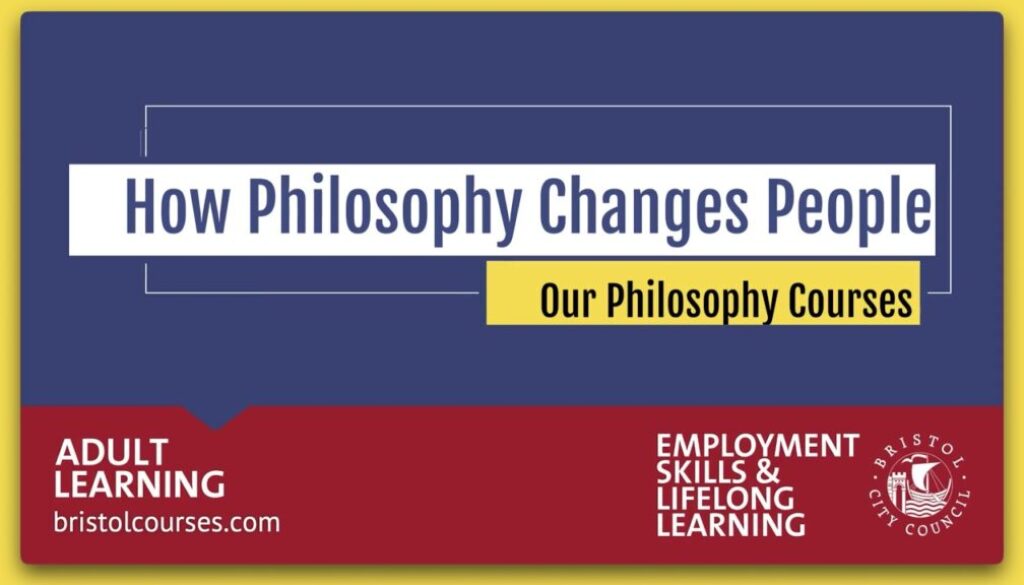
7. How Philosophy Changes People
A prospective-learner focused video built around:
Rather than concentrating on philosophers or theory, this film focuses on the personal value of studying philosophy.
Thinking Differently
Give It a Go
Making Time to Think
8. The Teacher as Learner
A more reflective short film:
Leo explains how a learner challenged his interpretation of Protagoras and how that exchange encouraged him to reconsider the subject and return to his own reading.
Still Learning
9. Know Thyself
The final standalone film brings the series to a natural conclusion. It combines:
Leo reflects on Socrates, the examined life, self-knowledge and his own definition of philosophy.
Know Thyself
What Is Philosophy?
From Topic Videos to Social-Media Moments
Once the longer interview had been mapped editorially, a second level of repurposing became possible. We identified moments that could communicate one complete idea in approximately 30–90 seconds. These were not simply random excerpts. Each short needed to:
- make sense without watching the full interview;
- begin with a clear idea or hook;
- work within a vertical social format;
- be understandable with or without sound;
- offer enough substance to reward the viewer;
- connect naturally with the wider philosophy content.
The final project produced 14 vertical key-moment videos.
Creating Hooks from Long-Form Content
The strongest social clips often came from a single sentence or idea within a much longer answer.
Examples included:
“When I come home from philosophy, I’m glowing”
A personal moment that immediately communicates Leo’s enthusiasm for the subject.
“I gave up a science degree to study philosophy”
A concise personal story with a built-in turning point.
“Do you need prior knowledge to study philosophy?”
A practical question that directly addresses a common barrier to joining an adult course.
“Why philosophy matters in the age of AI”
A topical entry point into Leo’s discussion of critical thinking and ethical decision-making.
“Challenge the idea, not the person”
A concise explanation of philosophical discussion and respectful disagreement.
“Can we do it — or should we do it?”
A clear distinction between technological possibility and ethical judgement.
“Life is full of layers”
A more conceptual short developed from Leo’s explanation of critical realism.
“Philosophy transforms you”
A direct statement about the personal impact of studying philosophy.
“Curious about philosophy? Give it a try”
A naturally promotional moment aimed at potential learners.
“The one philosophical idea everyone should encounter”
Leo’s reflections on Socrates and knowing ourselves.
“What is philosophy?”
The final definition from the interview condensed into a standalone piece.
“Philosophy doesn’t give you ready-made answers”
A counter-intuitive idea that works especially well as a social-media hook.
When One Idea Needed More Space
Not every strong idea fits comfortably into a conventional short. Leo’s village-pasture example was one of the clearest examples. The complete discussion develops from:
- a shared pasture;
- individual farmers adding more livestock;
- depletion of a finite resource;
- a learner recognising the climate-change analogy;
- the relationship between self-interest and shared responsibility;
- the philosophical principle of the common good.
Trying to force all of this into one very short clip would have weakened the story. Instead, it became two related social videos:
The Village Pasture — Part 1: What happens when everyone takes more?
and
The Village Pasture — Part 2: The Common Good
This allowed the story to retain its logic while creating a natural continuation between the two pieces.
Designing for Vertical Video
The social-media versions were not simply exports of the landscape edit. They were adapted specifically for vertical viewing. The short-form treatment included:
- 9:16 reframing;
- strong hook-led titles;
- on-screen captions;
- question or context overlays where required;
- emphasis of key moments;
- consistent Bristol Adult Learning branding;
- a closing card directing viewers towards further information.
The original project brief specifically called for a unified short-form design including title labels, question overlays, on-screen captions, highlights and a concluding Bristol Adult Learning card. This ensured that the short videos felt like a coherent series rather than disconnected social extracts.
Captions for Social Viewing
Short-form video is frequently viewed without sound. For that reason, the vertical edits included on-screen captions rather than relying solely on platform-generated subtitles. Captions were reviewed against Leo’s speech and corrected where necessary. This was particularly important because the interview included:
- philosophers’ names;
- specialist terminology;
- philosophical concepts;
- place names;
- academic vocabulary.
The caption treatment therefore served both accessibility and comprehension.
One Recording, Different User Journeys
The value of content repurposing is not simply that it creates more files. Each version serves a different purpose.
The full interview: For someone who wants depth and context.
The standalone topic videos: For someone looking for one particular answer, subject or aspect of the course.
The social shorts: For someone who may never have actively searched for philosophy classes, but encounters an interesting idea through social media.
This creates a natural content journey:
Social short > Standalone topic video > Full interview or course information > Course enquiry or enrolment
The same source recording can therefore support awareness, consideration and conversion.
Extending the Useful Life of a Recording
Without repurposing, an organisation may publish an interview once and then move on. With a structured content strategy, the same filming session can support communications over a much longer period. The Bristol Adult Learning project created material that could be used across:
- YouTube;
- course pages;
- social media;
- website content;
- campaign posts;
- future course promotion.
Rather than one publication event, the interview became a reusable content library. The project began with one philosophy tutor interview.It resulted in:
- 1 Full-Length Interview: A polished and structured 38:41 version of the complete conversation.
- 9 Standalone Topic Videos: Each built around a clear subject or audience question.
- 14 Vertical Social Videos: Each built around an individual idea, story or hook.
- 24 Finished Video Assets: All created from the same source interview.
The finished output exceeded the original proposal’s expectation of approximately 8–9 topic videos and 12 short-form key moments. More importantly, each format had a distinct purpose rather than simply increasing the asset count.
Content Repurposing Is an Editorial Process
The project demonstrates why long-form to short-form video is not simply a matter of cutting a long recording into equal pieces. Effective repurposing requires decisions about:
- what can stand alone;
- what needs context;
- what is interesting enough to become a hook;
- what is useful to a prospective customer or learner;
- which ideas have broader discovery potential;
- how much of an answer is needed to preserve its meaning;
- when one story should become two pieces;
- how different formats connect with one another.
The strongest short-form content is usually discovered inside the long-form material, not added afterwards.
Do You Already Have Long-Form Content?
Your organisation may already have interviews, webinars, presentations or training recordings containing dozens of useful pieces of content. Xelium can help identify and extract them. Our long-form to short-form video service can include:
- reviewing existing footage;
- identifying topics and key moments;
- restructuring long-form video;
- creating standalone subject-led edits;
- extracting social-media clips;
- vertical video formatting;
- captions;
- branded title and end cards;
- YouTube preparation;
- linking short-form and long-form content into a wider publishing strategy.
One good recording can become far more than one video. Talk to Xelium about repurposing your existing video content.